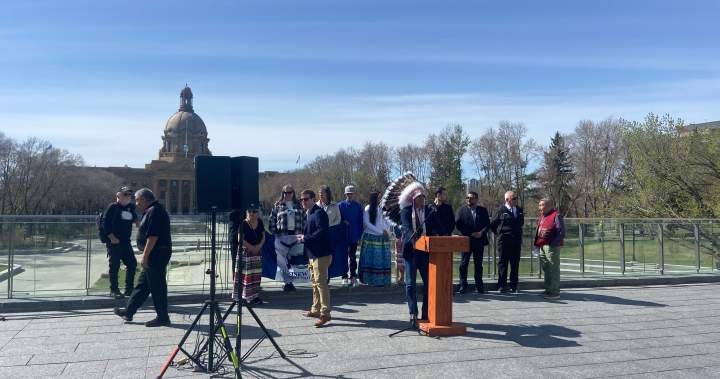
Mikisew Cree First Nation takes Alberta and Ottawa to court.
In a statement of claim filed Tuesday, the Alberta First Nation accused both governments of failing to protect their members from health problems caused by decades of oil sands development and other industrial activity.
The Mikisew Cree First Nation is one of the five Athabasca Tribal Council Nations and its people live on several reservations along the Athabasca River and near Wood Buffalo National Park in far northeastern Alberta.
Mikisew said Alberta and Canada have “failed to uphold their constitutional, fiduciary and Treaty obligations by allowing massive industrial development throughout and around the traditional territory of the Mikisew Cree without adequately managing the cumulative impacts on the environment and health.”
“We seek accountability and meaningful action to ensure our rights, our land, and our future are protected,” said Mikisew Chief Billy-Joe Tuccaro.
“We just want the good, healthy lifestyle that every Albertan deserves.”
The lawsuit comes weeks after Tuccaro took the First Nation’s report to Ottawa.
The First Nation is based in Fort Chipewyan, where the report found that cancer rates in the remote community have been 25 per cent higher than in the rest of Alberta for nearly 30 years.

Get the latest national news
Get the latest Canadian news delivered to your inbox so you never miss a trending story.
Tuccaro said last month preliminary findings showed 149 confirmed cancer cases between 1993 and 2022 in the community of about 900 people. But the number, he said, is likely much higher – closer to 250 or even 300 in his estimation.
That means cancer has affected about six out of every 10 households in Fort Chipewyan, just downstream of the Athabasca River from major oil field development near Fort McMurray.
At the time, Alberta’s Minister of Primary and Preventive Health Services Adriana LaGrange said the provincial data didn’t have the same findings, but she would check the numbers.
“There is no known causal relationship between oil sands development and cancer rates in the region. Since 2009, AHS has monitored cancer rates in the Fort Chipewyan region, including the Mikisew Cree First Nation,” said a ministry statement on Tuesday.
“The most recent AHS review reported no cases of cancer in children in the community and found that rates of cancer in adults were largely similar to cancer cases in other areas of the province. We will continue to review any new data that becomes available, including studies they have conducted, which we have not yet received.”

Alberta Indigenous Relations did not go into detail on the issue.
“The Government of Alberta is committed to meaningful consultation on projects that may be affected by Treaty rights and we take this responsibility seriously,” Alberta Indigenous Relations Minister Rajan Sawhney told Global News in a statement.
“As this matter is before the courts, it would be inappropriate to comment on specifics.”
Mikisew said any future talks needed to be followed by actions deemed meaningful.
“Those conversations will not be like the ones we’ve had for the last 127 years, where we put forward our recommendations and then shelve them,” Tuccaro said.
“We need good, concrete results before anything moves forward.”
The federal government said it was aware of the statement of claim and was “currently reviewing it.”

© 2026 Global News, a division of Corus Entertainment Inc.

Comments are closed, but trackbacks and pingbacks are open.