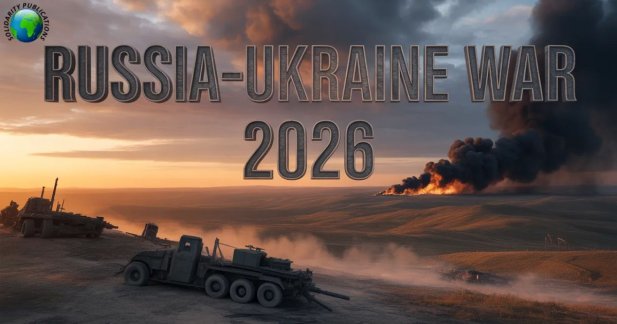
That Russo-Ukrainian War 2026 has entered a new and complex phase that goes far beyond clashes on the battlefield. What started as a fast-moving invasion has turned into a slow, grueling conflict influenced by strategy, survival, and global politics. Cross Russian occupation of Ukrainemillions of people face uncertainty and fear every day.
Report from Russian human rights violations continues to increase, incl deportation of Ukrainian children And forced displacement of civilians. This action raises serious concerns war crimes in Ukraine and long-term regional stability. For many observers, especially in the United States, understanding this war means taking a deeper look at military realities and their human impact.
A Look at the Russo-Ukrainian War in 2026
That Russo-Ukrainian War 2026 has turned into a slow, fierce conflict. Now it is showing clear signs war of attrition. Russia is still advancing, but the progress is still small. At the same time, Russian occupation of Ukraine continues in key areas such as occupied Kherson Oblast, occupied the Luhansk regionAnd Occupation of Mariupol. This creates long-term instability and fear among civilians.
Many reports highlight this Russian human rights violations And war crimes in Ukraine. This includes deportation of Ukrainian children, forced displacement of civiliansAnd illegal population movement. Experts are now asking why Russia is deporting Ukrainian children And what is happening in occupied Ukraine. This action raises serious concerns violation of international humanitarian law And Violation of the Geneva Conventions.
Important Developments from Russia’s Latest Attack
Recent attacks show that Russia’s progress has been slow. In some areas, movement is only a few meters per day. This reflects weak progress despite heavy losses. At the same time, Russia relies on it hybrid warfare tactics and powerful artillery attacks. These methods create stress but fail to provide quick results.
Another big problem is coercion in occupied territories. Civilians faced pressure to support the war effort forced labor in war zones And civil war support activities. Reports show children who produce military equipment and take part in it production of camouflage nets. Now many people are asking Are civilians forced to support the war? The answer seems increasingly clear.
Ukraine’s Military Strategy and Recent Progress
Ukraine has built a strong defense system. This includes trenches, drones, and layered protection. This slowed Russia’s advance. Ukraine also adapted quickly which helped it survive the pressure. That the impact of the war on civilians in Ukraine still high, but resistance continues.
Ukraine also revealed it Russian war crimes explained through global media. This includes forced relocation during the war And child deportation program. Questions like Is child deportation a war crime? And Why are Ukrainian children taken to Russia? is now at the center of global debate. These problems show the role of indoctrination in war and its long-term impact.
Russian Military Strategy: Main and Supporting Efforts
Russia focuses primarily on eastern Ukraine. Support efforts continue in the north and south. This strategy aims to weaken Ukraine over time. However, this is highly dependent on manpower and resources. This creates tension within Russia itself.
At the same time, Russia also uses it Russian occupation policy And Russian administrative control to maintain control. Systems like occupation government system And territorial integration policy help expand influence. Many analysts ask how Russia controls the occupied territories And How does Russia control the occupied territories? The answer lies in control, pressure, and fear.
Air, Missile, and Drone Warfare in Conflict
Modern warfare defines Russo-Ukrainian War 2026. Drones, missiles and airstrikes dominate. Russia uses these tools to damage infrastructure. This causes power outages and weakens the defense system.
These attacks are also deepening Ukraine humanitarian crisis 2026. The face of the city Ukraine water crisis, food shortages in the occupied territoriesAnd war zone medical shortages. Reports show 200,000 people without water in several regions. Now many people are asking How serious is the humanitarian crisis in Ukraine? The situation continues to worsen.
The Reality Behind Russia’s Strengths and Limitations
Russia still has great military power. However, cracks were still visible. Economic pressure is increasing. Growth slows and global influence weakens. Experts are now seeing the signs war-driven economic restructuring And long-term demographic manipulation.
Russia also struggles in the areas of technology and global trade. There is heavy dependence on allies. Meanwhile, systems like Russian financial control, free economic zone of RussiaAnd Economic integration occupied Ukraine aims to stabilize control. However, these efforts highlight deeper weaknesses.
Human Costs in War: Casualties and Civilian Impact
The loss of life was huge. Millions of people are affected. Families are destroyed. The whole city is damaged. That the suffering of civilians in war continues to grow. Many faces hunger and displacement Because blocking evacuation routes And lack of basic services.
Children suffer the most. Programs like Russian rehabilitation program for children And child indoctrination program raising concerns. This often includes Ukrainian cultural re-education And erasure of Ukrainian identity. This reflects a systematic indoctrination strategy and even forced cultural assimilation.
The Role of Allies and International Support
America and its allies play an important role. They provide weapons, training, and financial support. This helps Ukraine continue its defense. Sanctions also target the Russian economy.
However, Russia responded with Russian information war And Russian propaganda network. Tools like Kremlin-controlled app, digital surveillance of occupied areasAnd communication control system form a narrative. This creates a state-controlled narrative and strong the influence of the media in war.
Is a Peace Agreement Possible or Is War Developing?
Peace talks are still uncertain. Both sides held strong positions. Russia wants control. Ukraine demands full sovereignty. This creates a deadlock.
Meanwhile, expansion risks still exist. Continued fighting could expand the conflict. Experts warn of long-term instability. Questions like what happened in Kherson and Luhansk remain critical. Future Russo-Ukrainian War 2026 still unclear.
What does the future hold for the 2026 Russian-Ukrainian war?
The future depends on military strength, economic stability and global politics. The data shows 3,500 Ukrainian children deported And 4,500 student relocation program have already established long-term results. Projects like 107 infrastructure projects And funding 8.5 billion rubles shows deep integration plans. Even digital tools love it 24,000 MAX app users supporting control system.
General Questions
How many Russians will die in Ukraine in 2026?
Estimates suggest around 275,000–325,000 Russian troops have been killed since 2022, with the number of casualties much higher.
What are Putin’s conditions for ending the war?
Putin demanded that Ukraine remain neutral, accept Russian control over the occupied territories, and halt NATO expansion.
Who has a stronger army, Russia or Ukraine?
Russia has a larger army, but Ukraine is more adaptive and is supported by Western weapons and training.
How much did Russia lose in the war?
Russia is losing billions of dollars due to military costs, sanctions and a weakening economy with slow growth.
How many T-90 tanks has Russia lost in Ukraine?
Open source estimates suggest Russia has lost more than 100 T-90 tanks since the war began

Comments are closed, but trackbacks and pingbacks are open.