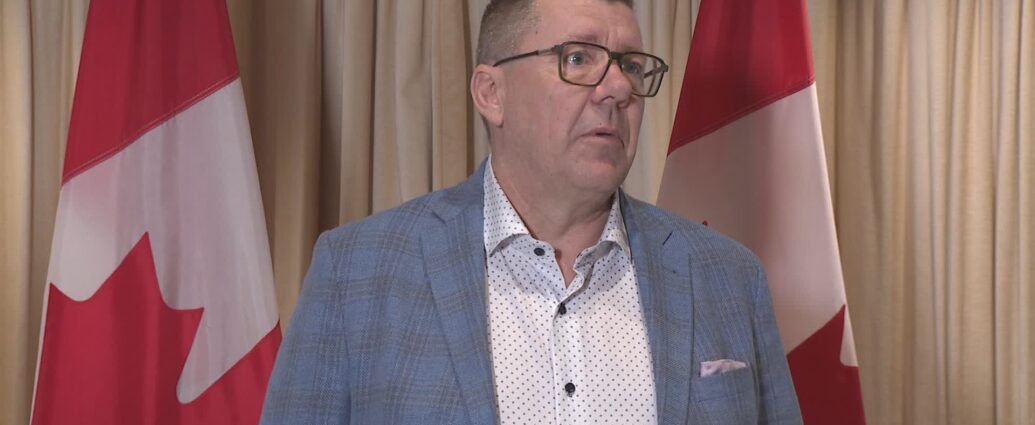
Saskatchewan Premier Scott Moe said India’s tariffs on Canadian lentils may increase after landing in India on a trade mission with another Canadian delegation.
Speaking to reporters upon his arrival in Mumbai on Friday, Moe said he “would love to see” the removal of tariffs on peas, lentils and pulse products – also known as pulses – before his trip ends next week. However, he added that not all products would see tariffs removed.
“I have heard some discussion regarding the lentil case, there is some discussion that the numbers may increase to some level,” Moe said.
India currently imposes a 10 percent tariff on Canadian lentils.
The country also imposed a 30 percent tariff on Canadian yellow peas in November to protect local producers.
India is a major importer of Canadian pulses, accounting for more than 50 percent of all pulse imports from 2000 to 2020, according to Pulse Canada.

Get daily National news
Get the day’s latest news, politics, economics and headlines, delivered to your inbox once a day.
Moe will be in India until next week and said he will focus on increasing trade with India regarding Saskatchewan staples such as potash and uranium, as well as agriculture.
“We have a great opportunity to really advance that trade and not just to other products but to the greater volume of products that we produce,” he said.
Trade with India has recently come under fire, and the threat of foreign interference from the country remains a concern.
A day before Prime Minister Mark Carney’s official visit to Mumbai and New Delhi, a senior official said the government believes India is no longer planning attacks against Canadians.
The official’s comments at a news conference were the first to suggest that India had halted covert operations that Canada has linked to killings and other violence.


But Public Safety Minister Gary Anandasangaree on Thursday did not fully agree with that statement when asked multiple times. Instead, Anandasangaree said there are outstanding issues regarding the safety and security of Canadians that are being resolved with India.
Meanwhile, Moe wants to continue doing business with India despite differences of opinion.
“It is important to sit at the negotiating table in countries where we have differences, but also in countries where we also have opportunities and points of agreement to be able to discuss possible differences of opinion,” he said.
The delegation will travel to New Delhi next week before heading to Australia and Japan.
Moe will not join the rest of the delegation on the trip outside New Delhi and will instead stay back to attend the Raisina Dialogue conference in the city, he told reporters.
Raisina’s dialogue runs from March 5 to 7, meaning she will be out of the country when Saskatchewan’s spring legislative session begins on Monday.
— with files from The Canadian Press
© 2026 Global News, a division of Corus Entertainment Inc.


Comments are closed, but trackbacks and pingbacks are open.