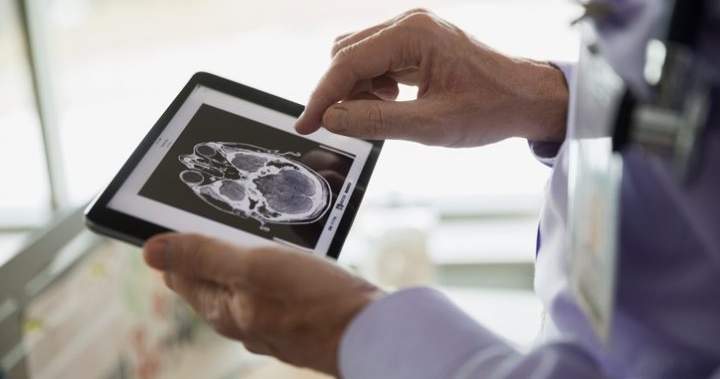
Alberta’s plan to allow patients to bypass doctors to get diagnostic medical tests is raising alarm bells at the Alberta Medical Association (AMA).
“We don’t see a role for patients directing diagnostic tests without involving a doctor,” said Dr. Brian Wirzba.
“Is this the right test? Who will follow up on it? And will it burden an already strained public system?”
The AMA has launched a new video at informedreform.ca to promote a campaign aimed at advocating for better health care system reform in Alberta, with a focus on keeping physicians involved in the decision-making process to “ensure that patient care is prioritized.”
“We know why this was proposed,” Wirzba told Global News. “There are significant access issues. Patients are waiting too long for diagnostic tests – they are frustrated and worried about their health.”
Minister of Primary Health Adriana LaGrange introduced Bill 29, Health Statute Amendment Act, 2026, in April. If passed, this legislation would allow for expediting some medical tests without a referral from a health practitioner.

LaGrange said this is the first step in a previously announced plan to expand privately administered medical testing.
“This is about adding capacity, not replacing our public systems,” LaGrange told reporters at a news conference before the bill was introduced.
Global News made several requests to the minister’s office to conduct interviews regarding the bill and to address concerns that have been raised, but his office declined the requests – citing previous press conferences.
LaGrange declined to say what specific health tests might be included or how the province might reimburse them. He said those details would be clarified in regulations to be created in the coming months.
In a video released in the fall, Premier Danielle Smith and LaGrange said the reforms would allow Albertans to purchase any private screening and diagnostic testing services they want.
“This includes MRIs, CT scans, full body scans, blood work – you name it,” LaGrange said in the video.

Smith said if a privately purchased test identifies a new, life-threatening condition, the government will reimburse the cost of the test.

Get weekly health news
Get the latest medical news and health information delivered to you every Sunday.
The province says current access to publicly funded preventative testing at no out-of-pocket costs requires a referral from a doctor, nurse, physiotherapist or dentist.
Some clinics and private health facilities already provide preventive testing services, but most still require a referral from a service provider.
There is also a government-funded self-referral screening program conducted through private clinics, including for mammograms, at no out-of-pocket expense.
The AMA raises questions about the costs of testing – not to the patient, but to the system in the future.
Research conducted by the organization shows that it may cost taxpayers up to $1 million more per year due to incidental findings that lead to further testing and sometimes invasive interventions.
The process of determining whether or not a test is clinically necessary is not easy, because there are several factors that influence decision making, including family history, environmental history, age, risk factors, and symptoms.

While the accidental finding may seem important to someone without a medical background, Wirzba says, just as we all have different spots and moles on our skin, the inside of our bodies looks different too.
“For patients who have clinically significant disorders – like early-stage cancer or other things that can be intervened in in a reasonable way that will really impact their health – of course that’s a good thing,” he said.
“The problem is that for every patient we see, depending on the test results, there may be 26 patients who actually also have an abnormality – none of which are clinically significant.”
Without a clinical history, once an abnormality is discovered, there is an obligation for follow-up testing or referral to ensure that the abnormality is in fact benign, Wirzba said.
“It’s not about not wanting people to know they have a disease,” he said. “This is about addressing a significant backlog in testing, [which] This is very important, but could potentially replace it with further savings when you see a doctor or subsequent testing in the public system.
“That’s the wrong way to go if we’re trying to protect the health care system.”
“We are very concerned and would advise patients not to go on Google and/or TikTok and decide that you need a full body scan because an influencer thinks it is the right thing to do,” he added.

There are also concerns about what people do with the information after testing is complete.
A new survey conducted by the Canadian Medical Association found that 97 per cent of doctors reported having to intervene to prevent harm or deal with consequences after patients followed false or misleading health information obtained online, including advice from artificial intelligence platforms such as ChatGPT.
“What the numbers really show is that misinformation has become part of routine clinical practice,” said Ma’n Zawaiti, a professor at McGill University.
“Physicians don’t just diagnose and treat – they now spend time correcting the beliefs that patients have.”
Zawaiti recently released research finding that AI-powered apps offering medical diagnoses are often limited by biased data and a lack of regulation, resulting in inaccurate and unsafe health advice.
He calls this issue of bias a “garbage in, garbage out” problem.
“The technology typically reflects the data it was trained on,” Zawaiti said. “When we talk about the data that AI uses, it is usually biased or incomplete.”
“One of the risks, perhaps, of people receiving results back is having to do something with them,” he said.
“If they rely on AI to help them, there are a lot of risks that could occur.”
“We have a system that produces confident and authoritative answers that are usually partly wrong or overly simplified,” he added. “It’s much more persuasive than the random blog posts you’ll get if you Google.”

Zawaiti said AI has been known to fabricate research, recommendations and even scientific relationships in something called “hallucinations.”
AI isn’t inherently “bad” when it comes to health information when combined with conversations with your medical team, Zawaiti said, adding that AI can help you frame important questions you might have missed and allow you to get more information about your own health – but not all the information on AI sites is accurate.
“In the end, patients will no longer talk to doctors, but instead talk to AI tools.”
When asked about the risks associated with patients using AI, the Ministry of Primary and Preventive Health Services said in a statement that patient safety and high-quality care are top priorities for Alberta’s health system.
“While misinformation in health care is nothing new, we agree that it is a real and growing challenge across Canada and can have serious consequences for patients,” the statement read.
“We strongly recommend that people seek trusted health advice and information. We have a large number of health care providers available to provide support, and free health advice is available at any time via 811. Albertans should feel confident that the services they receive are based on evidence, professional standards and clinical judgment.”
There is no timeline for when details of the bill will be released.
When asked about the concerns raised by the AMA, the ministry said, “Everything remains speculative until such regulations are developed and introduced.”
— With files from The Canadian Press


Comments are closed, but trackbacks and pingbacks are open.